
American Drone Dominance
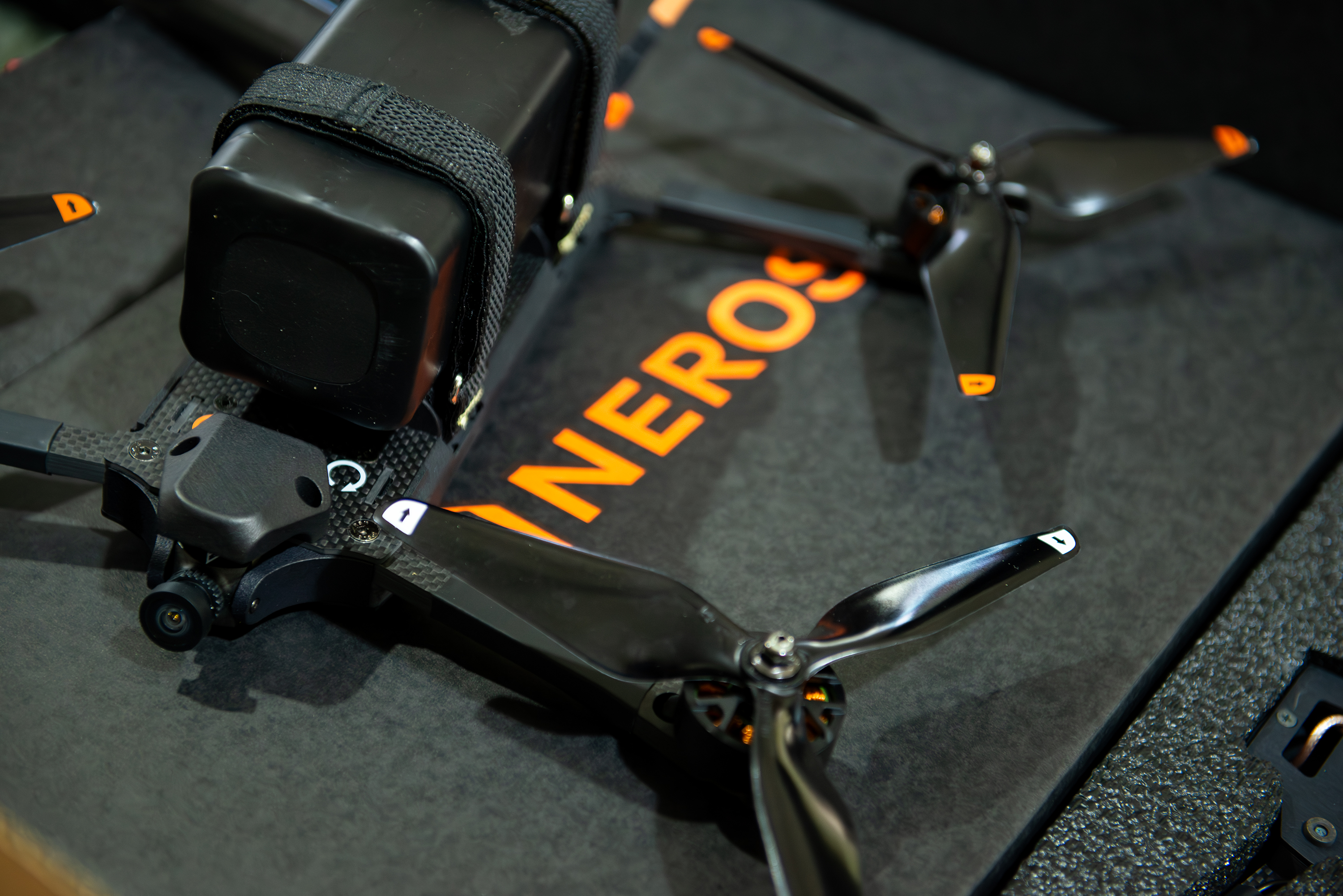
American Drone Dominance
When Russia invaded Ukraine in 2022, Neros’ founders immediately recognized the power of small drones on the battlefield. Having spent the better part of their lives building and racing first-person view (FPV) drones, it was immediately obvious to them why this, the most efficient and effective way of moving objects through three-dimensional space with precision control, would lend itself well to modern warfare. Suddenly, on the battlefields of Eastern Europe, they were watching their theories play out in real time.
Now, some three and a half years later, the United States Department of War is acutely aware of the need. With the signing of Secretary Hegseth’s Drone Dominance memo in July 2025, and the recent announcement of the Department’s Drone Dominance Program the United States is making a push towards the widespread adoption of what is proving to be the machine gun of our era.
But this begs the question: What is American drone dominance? How can it be consistently and reliably defined in strategic, operational, and defense-industrial base terms? The precise answers to these questions will determine the trajectory of America’s drone sector as well as the national security of the United States and its key allies more broadly.
What Constitutes an American Drone?
Many drone companies claim to offer products made in the United States or that are NDAA-compliant. The BlueUAS List seems to contain some of each. However, these labels can be misleading.
At a high level, a manufacturer can claim a drone is American by simply assembling a few large pieces in the US. However, a drone is made up of several subsystems including electronics (radios, flight controller, mission computer, etc.), powertrain (motors or engine), and an airframe. These subsystems are, in turn, made up of several sub-components, most notably the silicon chips that are used to build the electronics.
A drone that is “made in America” may have a flight controller that is assembled somewhere in Europe or even America, but that flight controller often uses a micro-controller that is made in China. Whether out of malice or ignorance, the manufacturer may self-certify the drone as NDAA-compliant when it in fact contains Chinese microelectronics. This leaves a vital capability dependent on an adversary—unacceptable in our eyes.
Given this blurred regulatory picture, it is not entirely surprising that there is widespread confusion regarding what it means for a drone to be American.
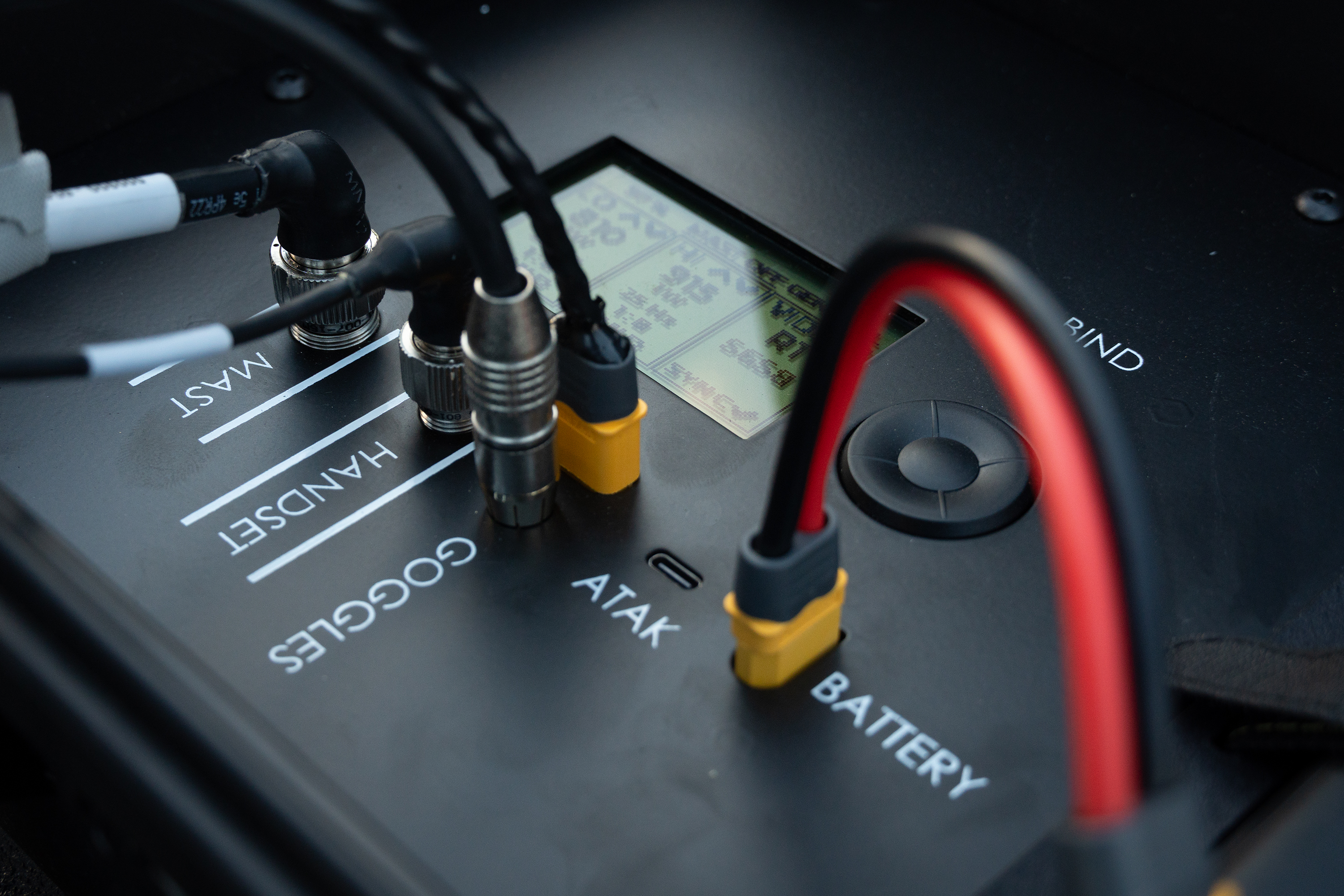
While it has been an immense challenge, building a drone that is performant in Ukraine while maintaining reasonable cost, all without Chinese microelectronics, has been the greatest engineering success achieved by Neros to date. It may sound trivial, but almost every commercially available FPV drone radio on the market boils down to the same Chinese module—and this is just the electronics.
The vast majority of batteries, motors, and airframes for small drones are also made in China. While this does not pose the same cybersecurity threats and operational risks as chips, a supply chain completely controlled by a foreign adversary can be cut off at any moment—a fact COVID made all too apparent. We must fully absorb this lesson and act upon it.
To make matters worse, each one of these components has several layers. Take motors, for example. First neodymium and other rare earth metals need to be extracted. Then, those metals need to be processed into magnets. Stators need to be stamped out of super thin electrical steel, then assembled. The bell housing needs to be cut out of aluminum or steel then the whole motor needs to be wound and assembled. Finally, the assembled motor is balanced and tested. Each one of these processes—from the extraction of metals to the production of balance and test machines—is dominated by China.
That is why we maintain that a drone is not truly American merely by virtue of its assembly in the United States. An American drone is one that is assembled in the United States and whose subsystems, sub-components, raw materials, and associated processes are all done in the US or in allied countries. This is extremely difficult to do, but it is necessary to building a real deterrent.
By some estimates, Ukraine manufactured almost five million drones in 2025. Other estimates place China’s production capacity at ten times this figure. Meanwhile, US production is thought to be closer to fifty thousand, a breathtaking and intolerable capability gap. To make matters worse, almost every drone made in Ukraine and Russia is made using Chinese electronics. Compared to the Chinese, then, we are several orders of magnitude behind.
The strategic implications and impending risk are clear. If the United States does not dramatically increase its ability to produce drones, we will be at a significant disadvantage in any kinetic conflict with a near-peer adversary and, worse, we will be lacking a key driver in deterring any such conflict. Wars break out when deterrence fails and a belligerent state convinces itself that it can achieve rapid success at a low cost.
However, the situation here in the United States has not remained static. In November 2025, US Army Secretary Dan Driscoll made public the Army’s ambition to purchase one million drones over the next few years. This is in addition to the Drone Dominance Program which seeks to buy 340,000 drones over the next 24 months.

While this large demand signal is imperative to drive action from industry, the meaningful, sustained investments necessary to build will only come from the recognition that, to keep the free world free and to deter totalitarian regimes, the United States must be able to achieve and maintain dominance in drone manufacturing and, no less critically, distribution—even in wartime.
Production capacity alone, however, is not enough to secure dominance. The drones being produced also must be continuously effective in actual combat. This, second only to supporting an ally in time of need, drives our commitment to fielding systems at scale in Ukraine. A future piece will chronicle our lessons learned in Ukraine, but specific performance metrics such as range and payload capacity, jamming resistance, and the importance of manual piloting modes are all essential to ensuring drones produced at scale can generate the required battlefield effects during modern conflict.
Neros’ Response
This is why, last week, we announced Project Millennium, our plan to build the first factory in the United States that is capable of producing one million drones per year. As outlined above, merely assembling drones out of foreign parts is not enough. For our country to truly dominate in drones, we must also make the subsystems and ensure that those subsystems are made with components sourced in the United States or other friendly countries.
At Neros, we already make the most American FPV drone available. We have already made great progress in moving production of subsystems and components to friendlier countries (thanks, in part, to our inclusion on the CCP’s Unreliable Entities List). All of our electronics are verifiably made in the United States and contain no critical Chinese chips. We go above and beyond the NDAA requirements and source our motors, antennas, and other mechanical components in friendly nations. However, some of these friendly nations are geographically at risk in the event of a conflict. That is why, in addition to being able to assemble one million drones per year, our Millennium Factory targets subsystems necessary for those drones.
American national security requires the robust redundancy, strategic decentralization, and distributed risk that will render the American drone sector invulnerable to supply chain strangulation. To keep the West free and deter totalitarian regimes in cities such as Beijing, Moscow, Tehran and Pyongyang, America needs to dominate in drones. The Neros Millennium Factory will allow America to do just that.